Janggi (Korean Chess) rules and how to play
Overview
Janggi (장기) is the traditional Korean chess game, a close relative of Xiangqi. Pieces stand on the intersections of a 9×10 board. There is no river, and both palaces have diagonal lines. Cho (blue/green) moves first and Han (red) moves second.
Starting position
Each side has 16 pieces: 1 General, 2 Guards, 2 Elephants, 2 Horses, 2 Chariots, 2 Cannons and 5 Soldiers.
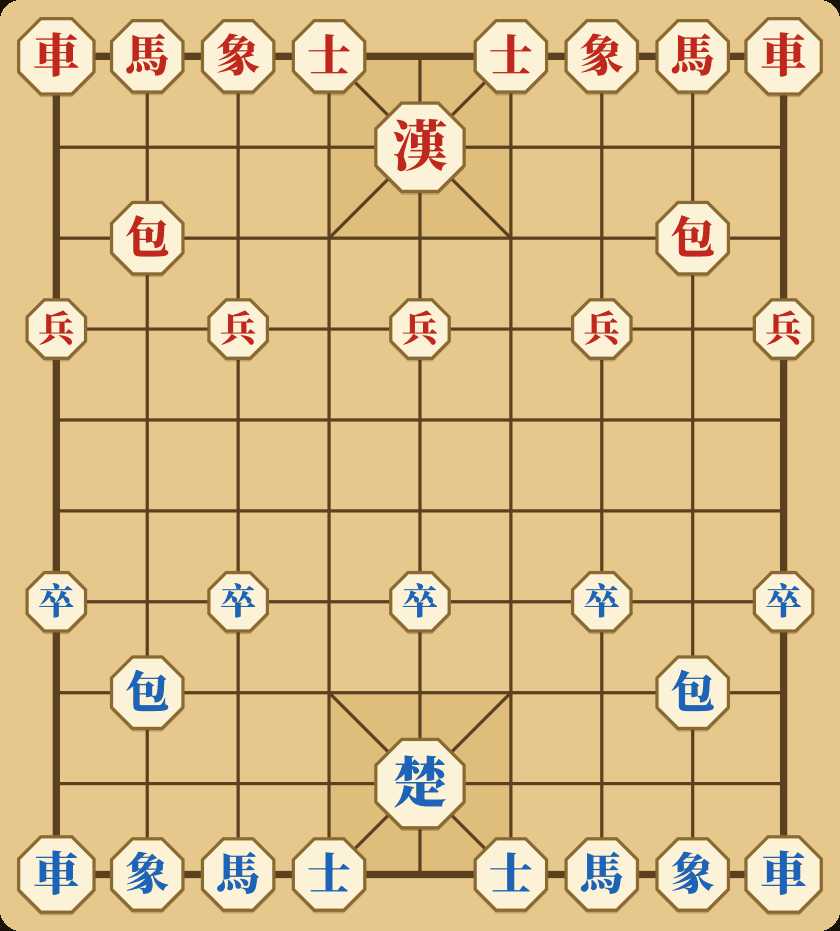
- The General starts in the centre of the palace, with the two Guards beside it on the back row.
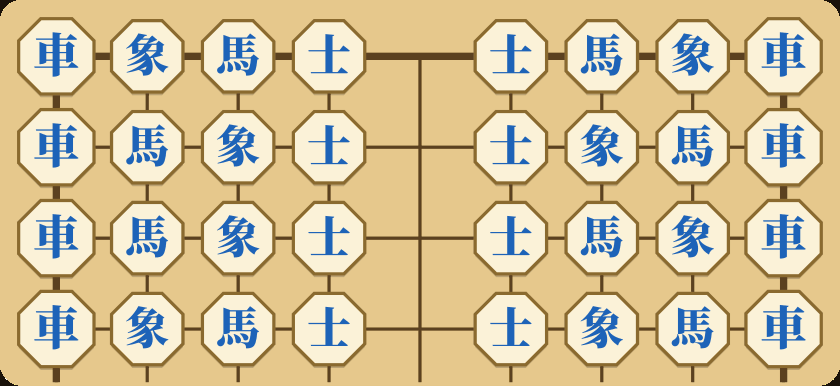
- Chariots stand in the corners. The four points between a Chariot and a Guard hold the Horses and Elephants.
- Horse/Elephant setup: before the game each player chooses one of four arrangements (Horse-Elephant on each side, in four combinations). The game offers all four, plus random.
- The Cannons stand on the row in front of the General, on the second and eighth lines. The five Soldiers stand on every other line in front of them.
How to win
Checkmate the opponent's General (janggun that cannot be escaped). A game can also end by resignation, time out, a bikjang draw, or when both players pass in a row.
How each piece moves
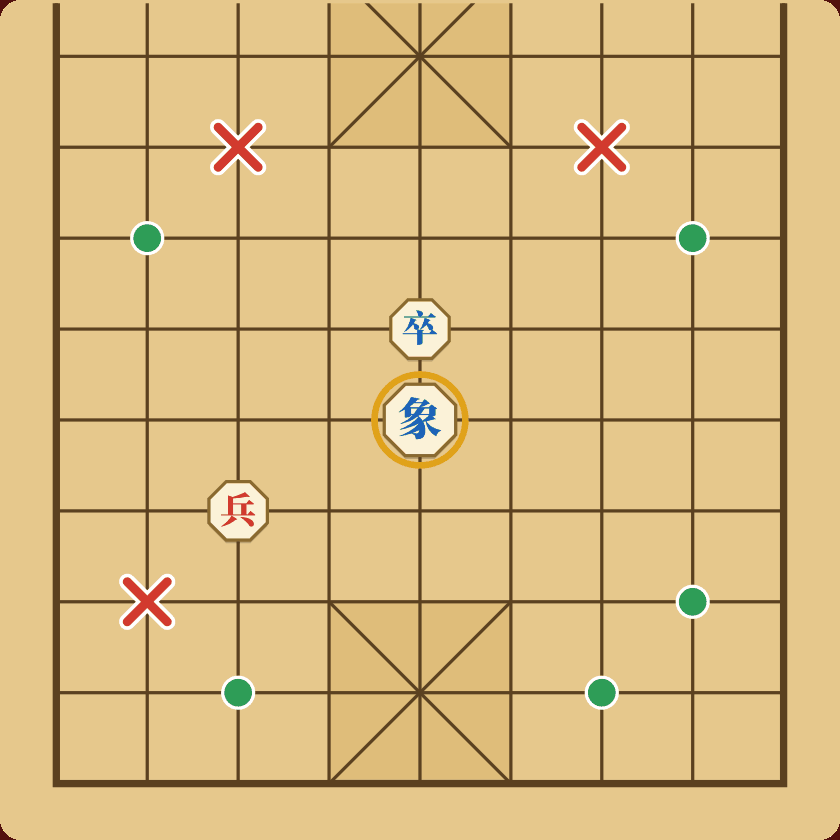
How to read the diagrams: green dot = a square the piece can move to; red ring = an enemy piece it can capture; ✕ = blocked, cannot go there; gold ring = the piece being explained.
- General: one step within the palace. It may also move diagonally along the palace lines.
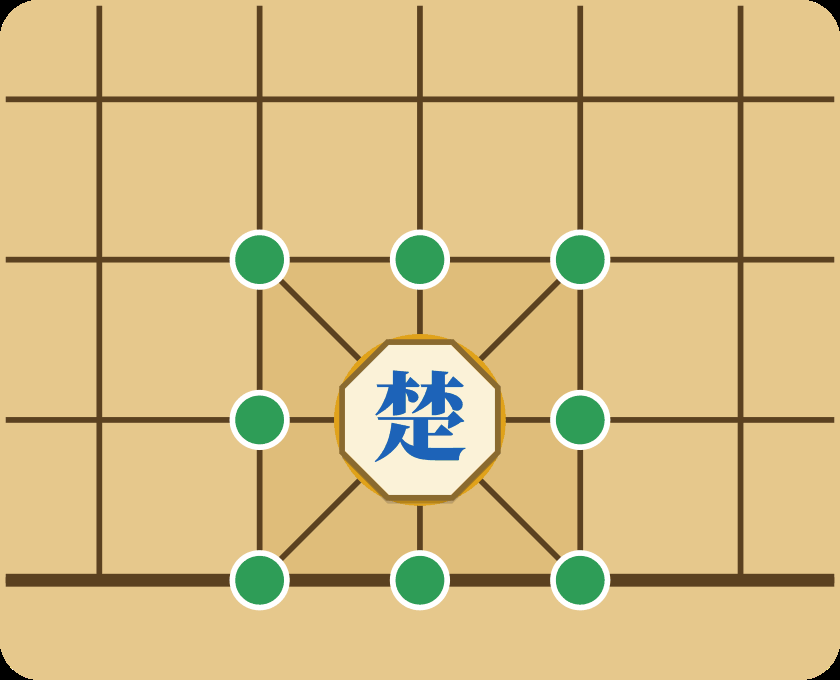
- Guard: moves like the General and cannot leave the palace.
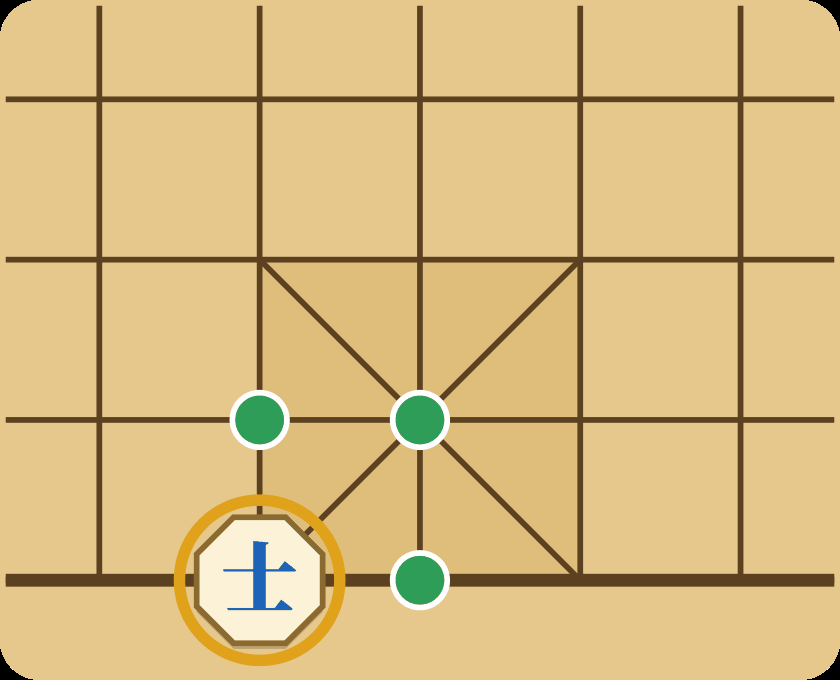
- Chariot: any number of steps along rows and columns. Inside a palace it can also follow the diagonal lines.
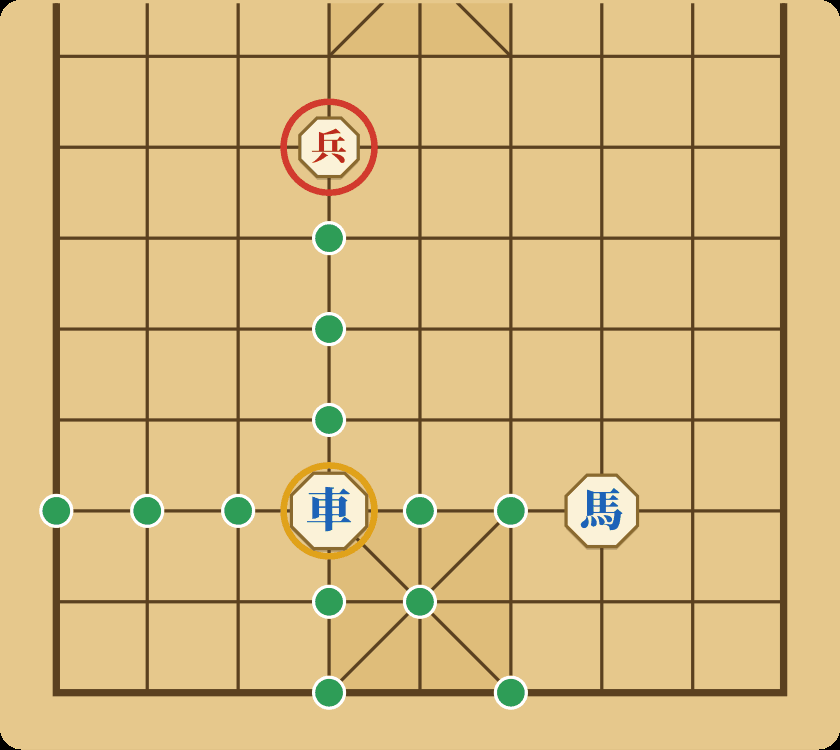
- Cannon: moves or captures by jumping over exactly one piece. A Cannon can neither jump over nor capture another Cannon.
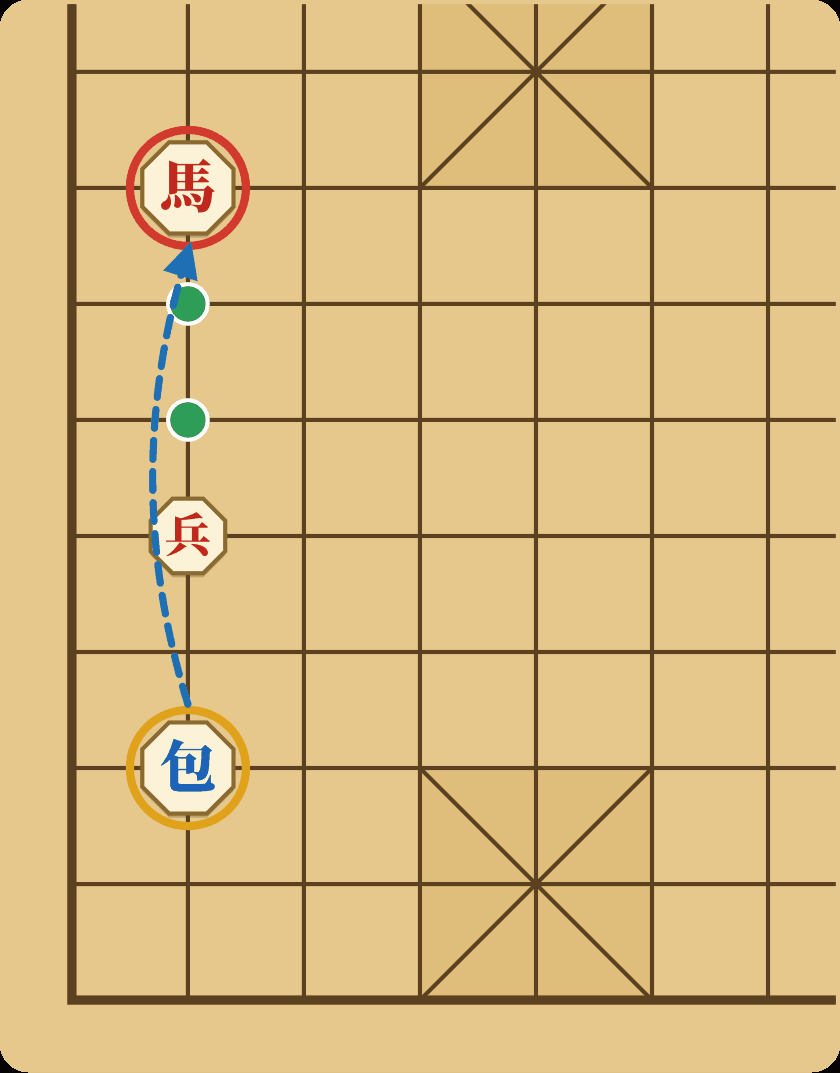
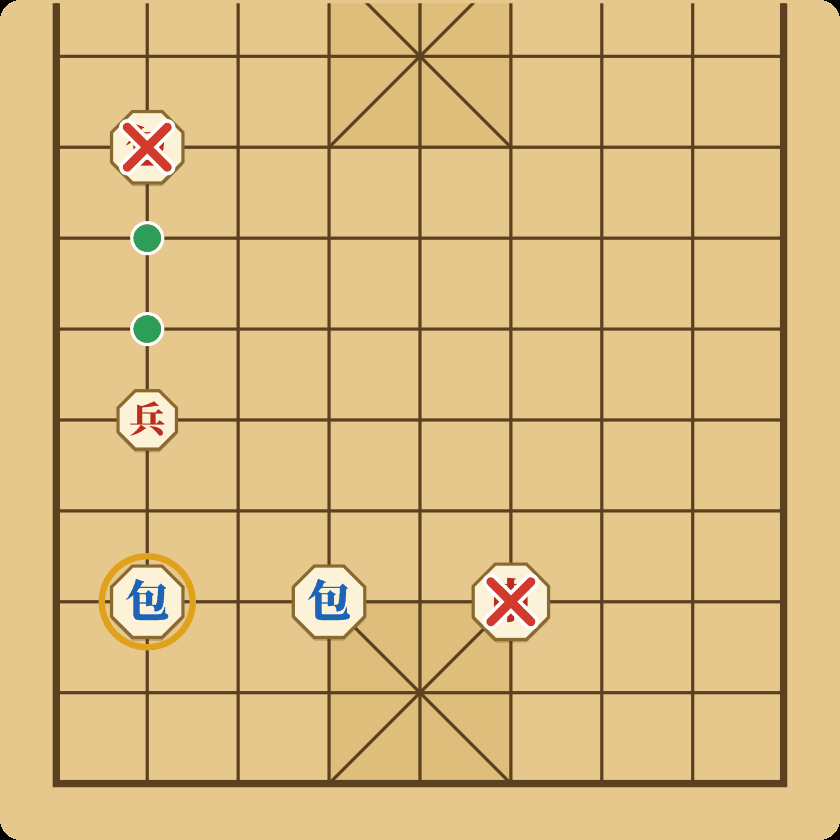
- Horse: one step orthogonally, then one step diagonally. It is blocked if a piece stands on the first step (meok).
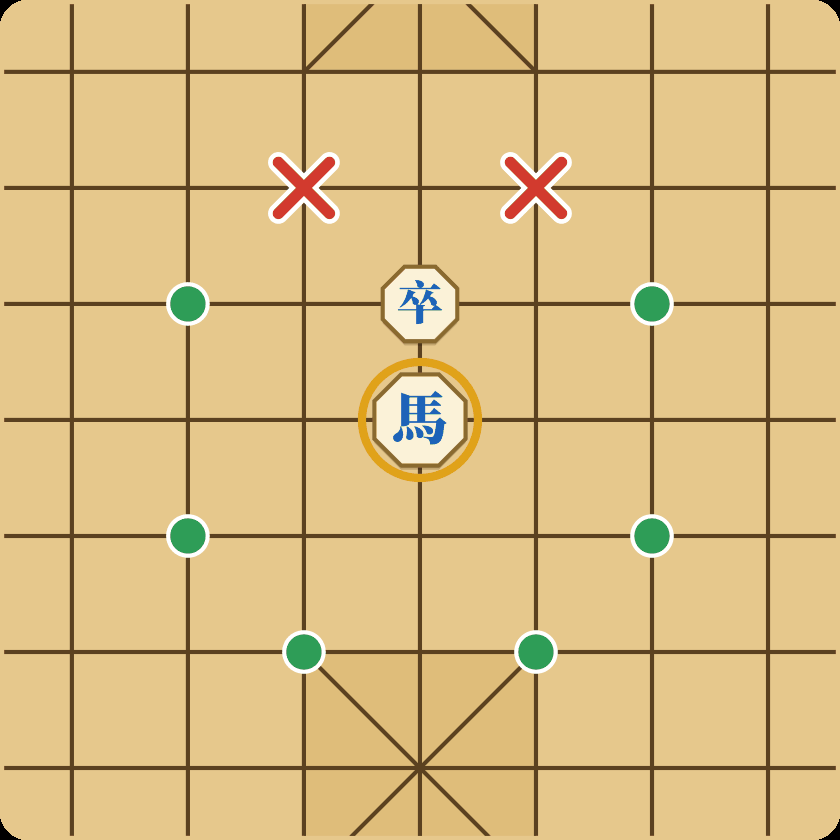
- Elephant: one step orthogonally, then two steps diagonally. It is blocked if a piece stands in its path (meok). It may cross the centre of the board, as there is no river.
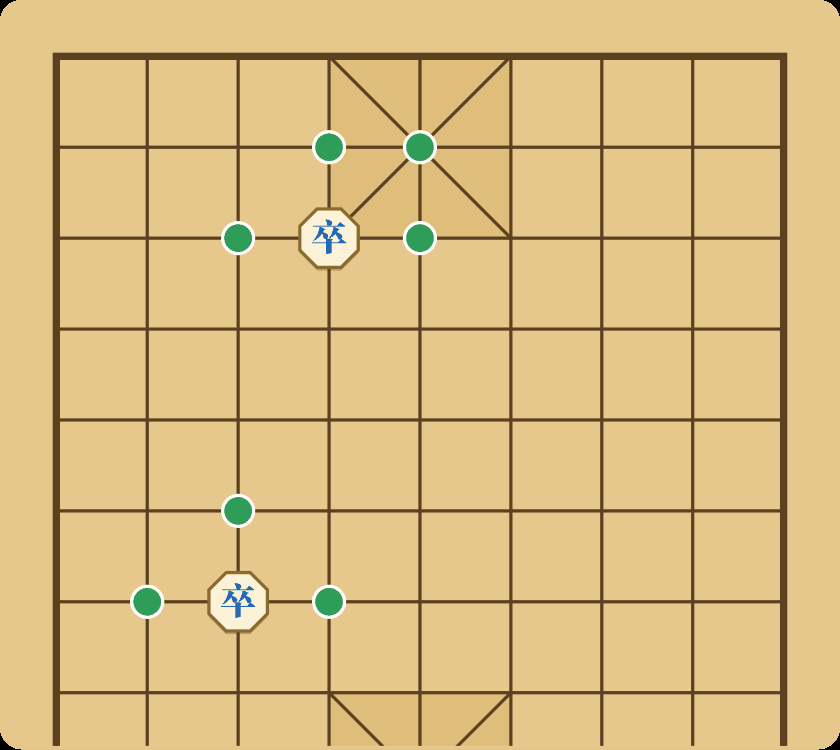
- Soldier: one step forward or sideways, never backward. In the enemy palace it can also move diagonally forward along the lines.
Special rules
- Check (janggun): if you are in check you must get out of it.
- Daegung / Bikjang: the two Generals may face each other on an open file. When that happens, the player to move must break the face-off or declare Bikjang, which is a draw. If no move breaks it, the game is a draw.
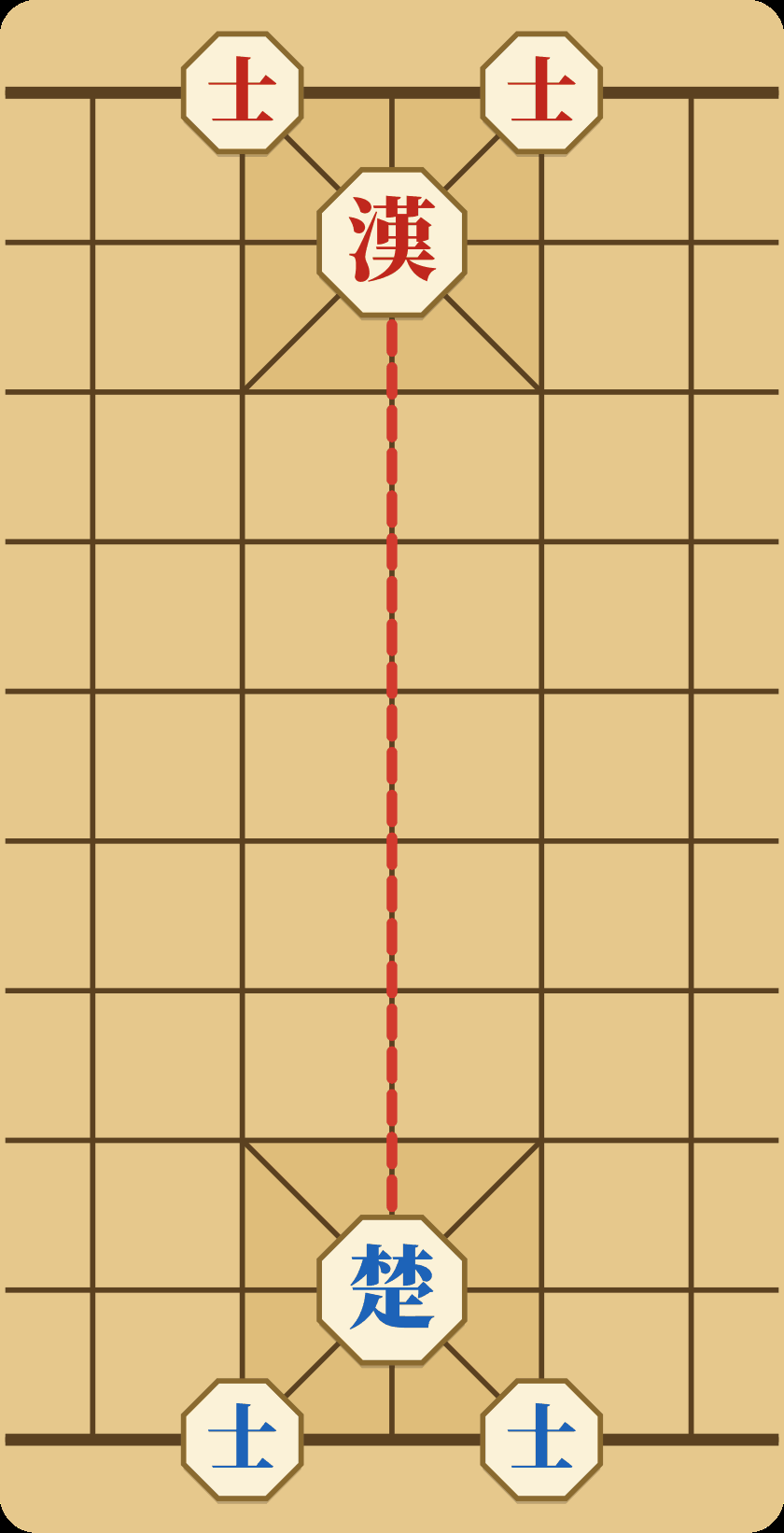
- Pass (hansu-swim): when you have no legal move, or want to wait, you may pass. You cannot pass while in check or in daegung. Two passes in a row make the game a draw.
- Piece points: Chariot 13, Cannon 7, Horse 5, Elephant 3, Guard 3, Soldier 2. Han, moving second, receives a 1.5-point bonus (deom). The game shows these points as a guide to the material balance.
Beginner tips
- Chariots are the strongest pieces. Bring them out early and use the palace diagonals.
- A Cannon needs a screen, and it cannot use another Cannon as one. Remember that an enemy Cannon cannot be captured by your Cannon.
- Try each Horse/Elephant setup to see which one suits your style; the choice changes how your pieces defend and attack.
- Count points before you swap pieces, so you know whether a trade helps you.
- Watch for blocked Horse and Elephant moves (meok). A single piece in the path stops them.
- Use the pass sparingly. It helps in blocked positions, but you cannot use it while in check.
Questions
- How is it different from Xiangqi? No river, diagonal lines in the palaces, Chariots and Cannons use them, Soldiers move sideways from the start, the Elephant moves 1+2, and you can pass.
- Who moves first? Cho (blue/green).
- Can I play for free? Yes. Play against the AI or with a friend in your browser with no sign-up.
장기 규칙과 두는 방법
소개
장기는 한국의 전통 보드게임입니다. 9×10줄의 교차점에 기물을 놓고 둡니다. 강(江)이 없고, 양쪽 궁성에 대각선이 있는 것이 특징입니다. 초(청·녹색)가 먼저, 한(홍색)이 나중에 둡니다.
처음 배치
각 편 16개: 궁 1, 사 2, 상 2, 마 2, 차 2, 포 2, 졸·병 5.
- 궁은 궁성 한가운데에서 시작하고, 사 두 개가 아랫줄에 놓입니다.
- 차는 양 끝, 차와 사 사이 네 곳에 마와 상이 들어갑니다.
- 마·상 차림: 대국 전에 각자 네 가지 차림(상마마상, 마상상마, 마상마상, 상마상마) 중에서 고릅니다. 이 게임에서는 네 가지와 랜덤을 고를 수 있습니다.
- 포는 궁 앞줄 2번·8번 선에, 졸·병 다섯은 그 앞에 한 줄 건너 놓입니다.
승패
상대 궁을 피할 수 없는 장군(외통)으로 몰면 이깁니다. 기권, 시간 초과, 빅장(무승부), 양쪽이 연달아 한수쉼을 해도 대국이 끝납니다.
기물의 움직임
그림 보는 법: 초록 점 = 이동할 수 있는 곳, 빨간 고리 = 잡을 수 있는 상대 기물, ✕ = 막혀서 갈 수 없는 곳, 금색 고리 = 설명 중인 기물.
- 궁: 궁성 안에서 한 칸. 선이 이어져 있으면 대각선으로도 갈 수 있습니다.
- 사: 궁과 같은 움직임. 궁성 밖으로 나갈 수 없습니다.
- 차: 가로세로로 몇 칸이든 갑니다. 궁성 안에서는 대각선 선을 따라서도 갑니다.
- 포: 기물을 하나만 뛰어넘어 이동하거나 잡습니다. 포는 포를 뛰어넘을 수도, 잡을 수도 없습니다.
- 마: 가로세로로 한 칸 간 뒤 대각선으로 한 칸. 첫 한 칸에 기물이 있으면(멱) 움직일 수 없습니다.
- 상: 가로세로로 한 칸, 대각선으로 두 칸. 지나는 길에 기물이 있으면(멱) 움직일 수 없습니다.
- 졸·병: 앞이나 옆으로 한 칸. 상대 궁성 안에서는 대각선 앞 선도 갑니다.
특별 규칙
- 장군: 장군을 받으면 반드시 피해야 합니다.
- 대궁·빅장: 궁끼리 마주 보는 상태(대궁)가 될 수 있습니다. 그때 받는 쪽은 대궁을 풀거나 "빅장"을 선언해 무승부로 할 수 있습니다. 풀 수 있는 수가 없으면 무승부입니다.
- 한수쉼: 둘 수 있는 수가 없을 때나 상황을 보고 싶을 때 할 수 있습니다. 장군 중·대궁 중에는 불가하며, 양쪽이 연달아 쉬면 무승부입니다.
- 기물 점수: 차 13, 포 7, 마 5, 상 3, 사 3, 졸·병 2. 후수인 한에게는 1.5점의 덤이 더해집니다.
초보자 팁
- 차가 가장 강한 기물입니다. 일찍 활용하고 궁성의 대각선도 이용하세요.
- 포는 받침이 되는 기물이 필요하며, 포를 받침으로 쓸 수 없습니다.
- 마·상 차림은 네 가지를 모두 시험해 보고 자신에게 맞는 것을 찾으세요.
- 기물을 바꾸기 전에 점수를 계산해 손익을 확인하세요.
- 마와 상은 길목에 기물이 하나만 있어도 막힙니다(멱).
- 한수쉼은 막힌 국면에서 유용하지만, 장군 중에는 쓸 수 없습니다.