Xiangqi (Chinese Chess) rules and how to play
Overview
Xiangqi (象棋, Chinese chess) is a two-player strategy game from China, played by hundreds of millions of people and known as Cờ Tướng in Vietnam. The board has 9 lines by 10 lines, and pieces stand on the intersections. A river runs across the middle, and each side has a 3×3 palace. Red moves first.
Starting position
Each side has 16 pieces: 1 General, 2 Advisors, 2 Elephants, 2 Horses, 2 Chariots, 2 Cannons and 5 Soldiers.
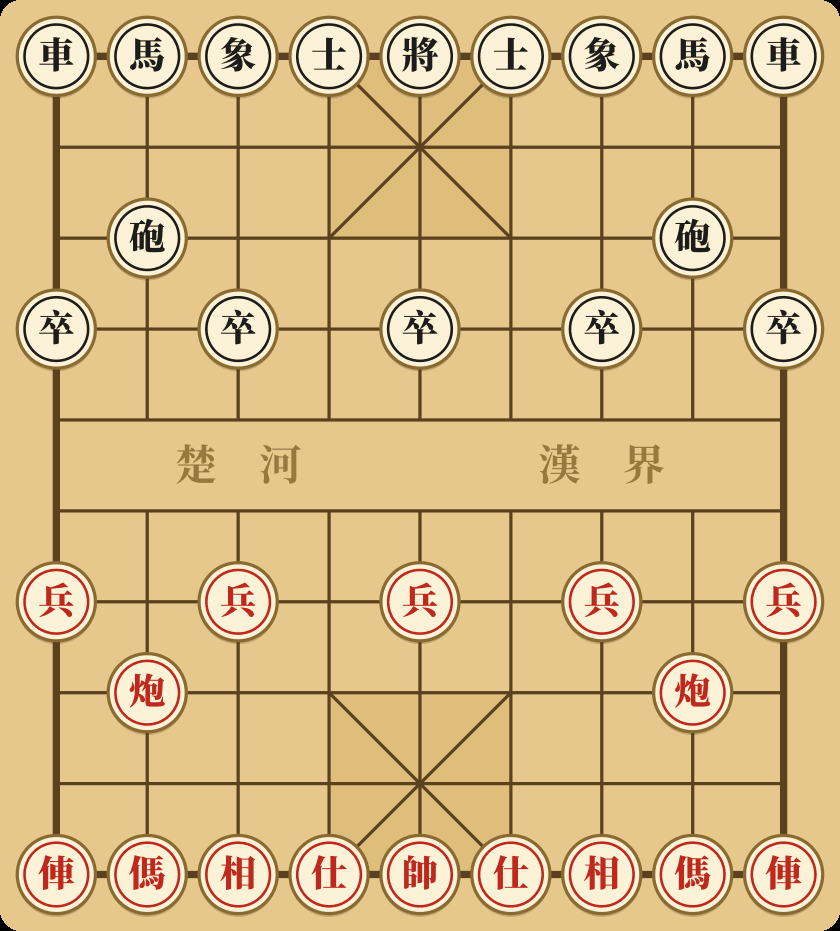
- Back row (left to right): Chariot, Horse, Elephant, Advisor, General, Advisor, Elephant, Horse, Chariot.
- The two Cannons stand on the third row, in front of the Horses' files.
- The five Soldiers stand on the fourth row, on every other line (files 1, 3, 5, 7, 9).
How to win
Checkmate the opponent's General, or leave the opponent with no legal move. Unlike international chess, having no legal move is a loss, not a draw. You may also win if the opponent resigns or runs out of time.
How each piece moves
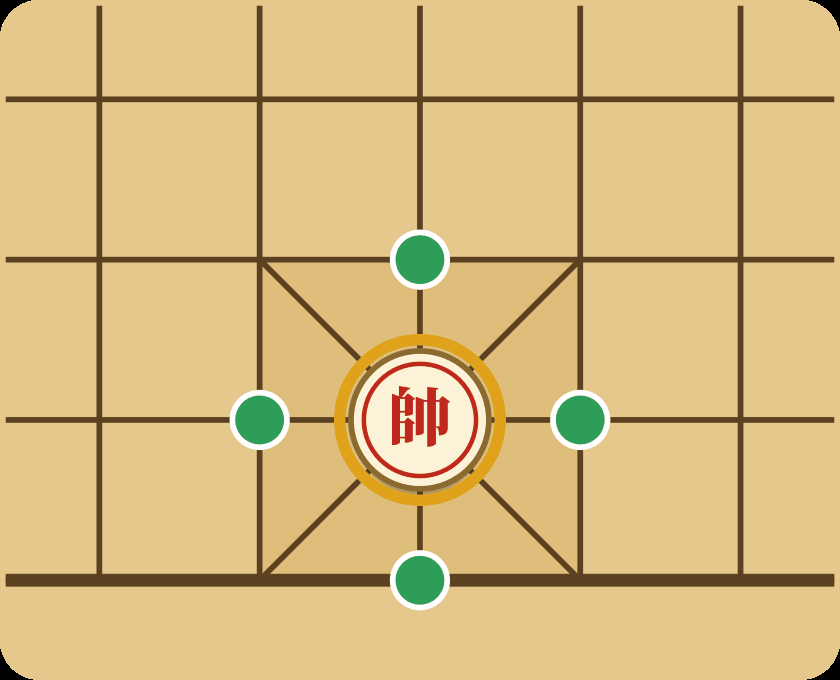
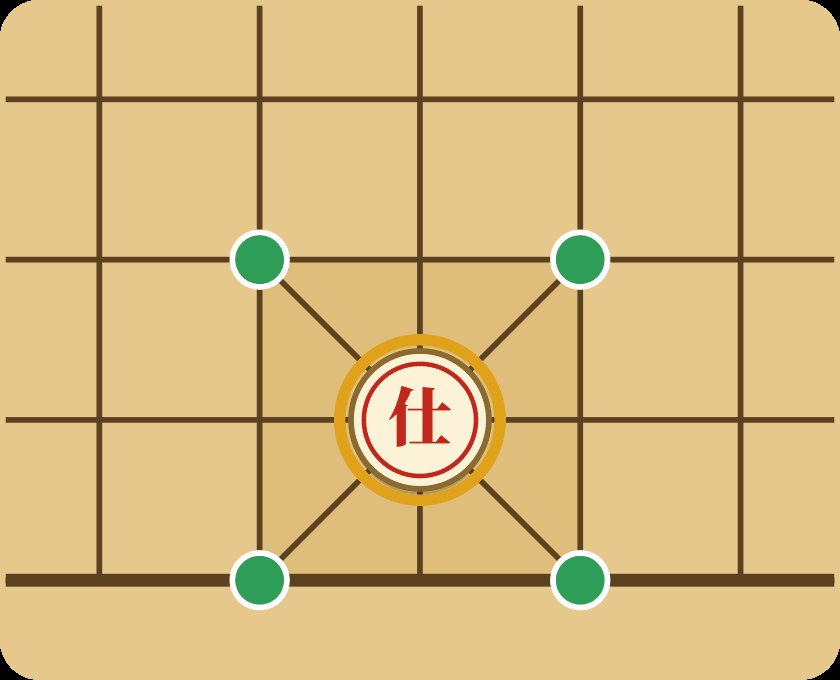
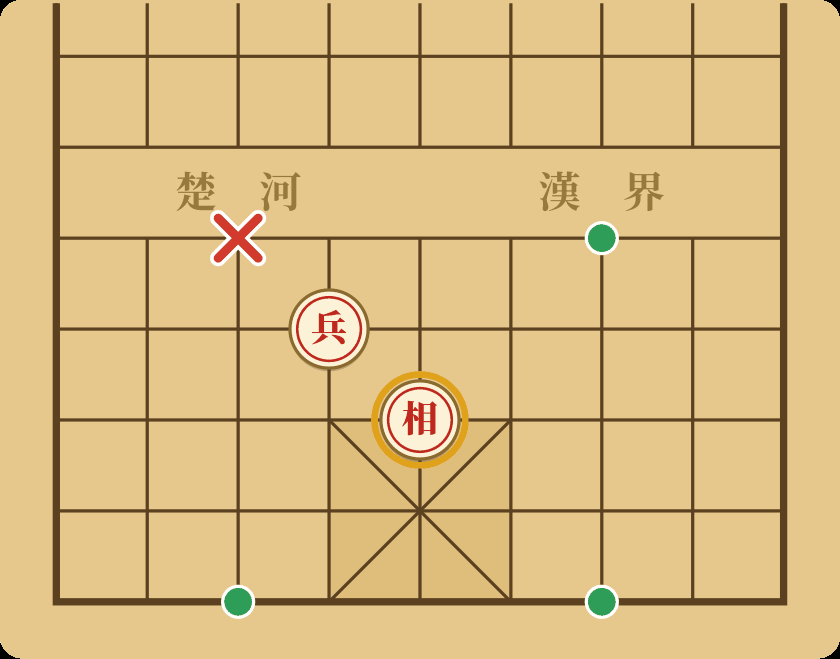
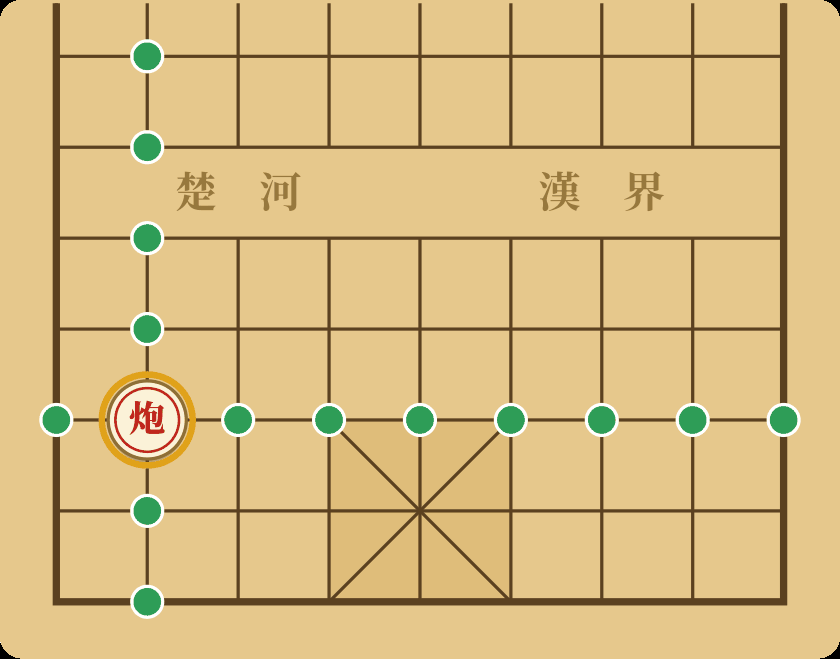
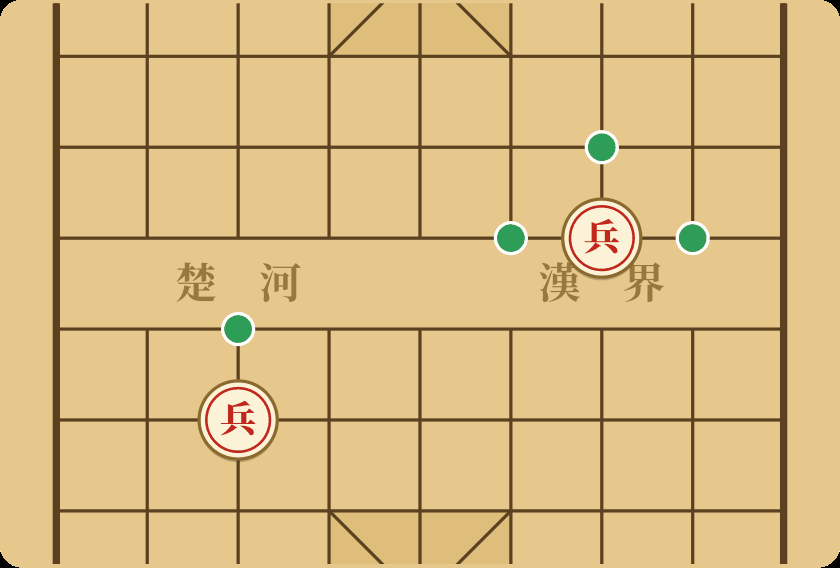
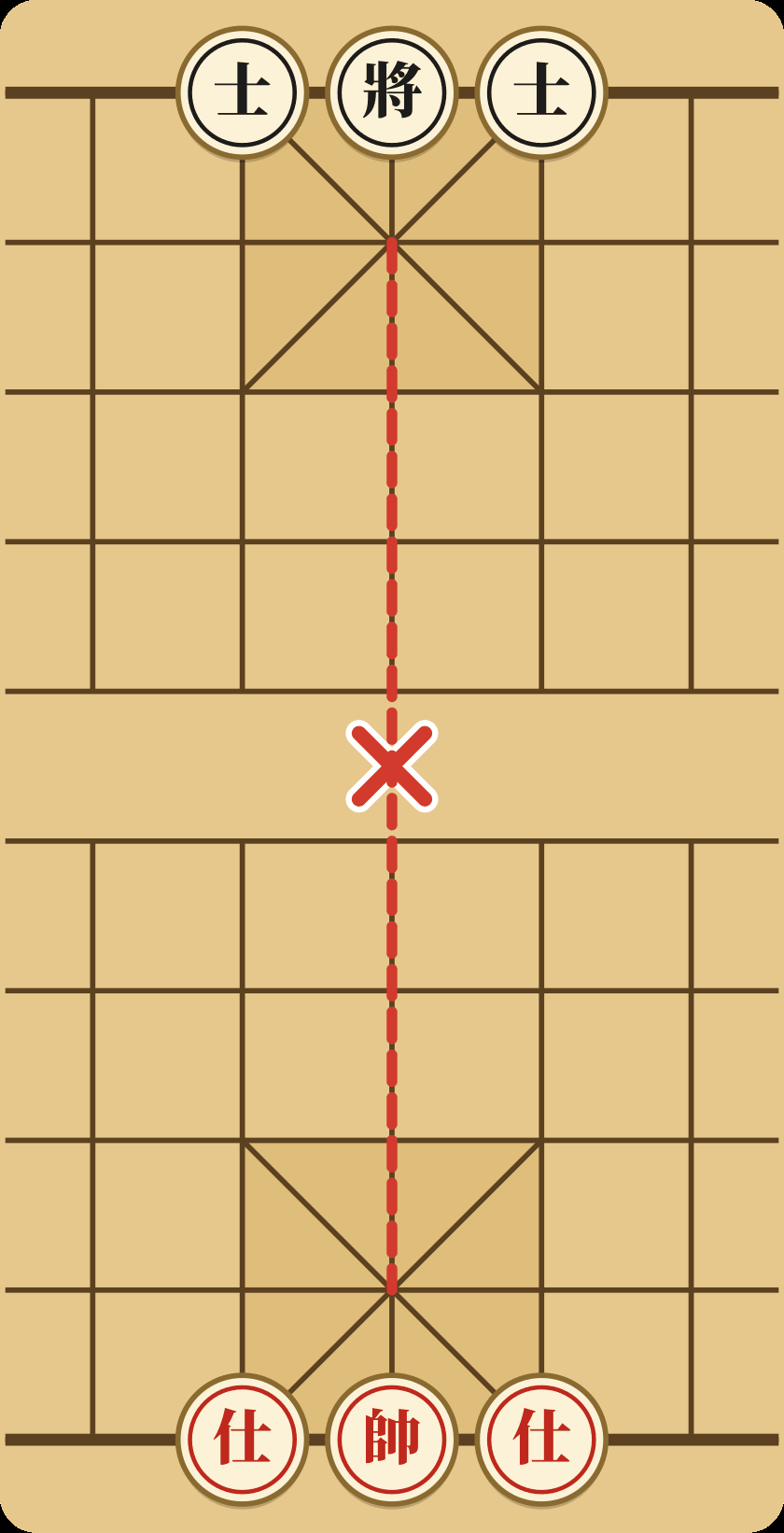
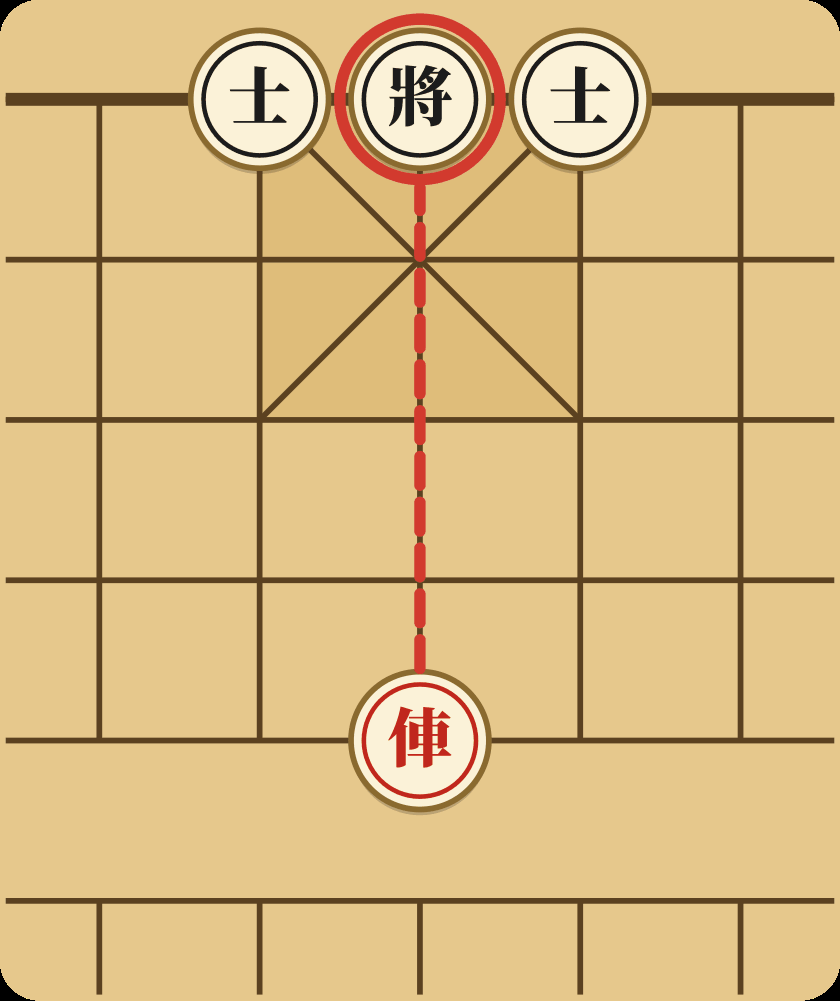
How to read the diagrams: green dot = a square the piece can move to; red ring = an enemy piece it can capture; ✕ = blocked, cannot go there; gold ring = the piece being explained.
- General (帥/將): one step up, down, left or right, staying inside the palace.
- Advisor (仕/士): one step diagonally, staying inside the palace.
- Elephant (相/象): two steps diagonally. It cannot cross the river, and it is blocked if a piece stands on the middle point (the "elephant's eye").
- Horse (馬): one step straight, then one step diagonally outward. If a piece stands on the first step (the "horse's leg"), the Horse cannot move that way.
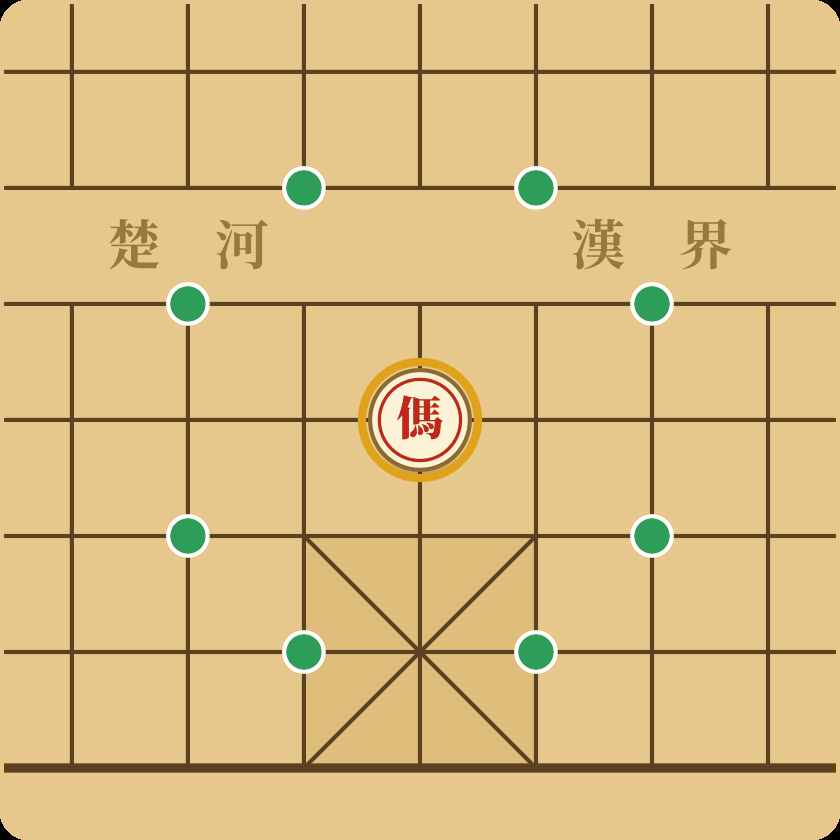
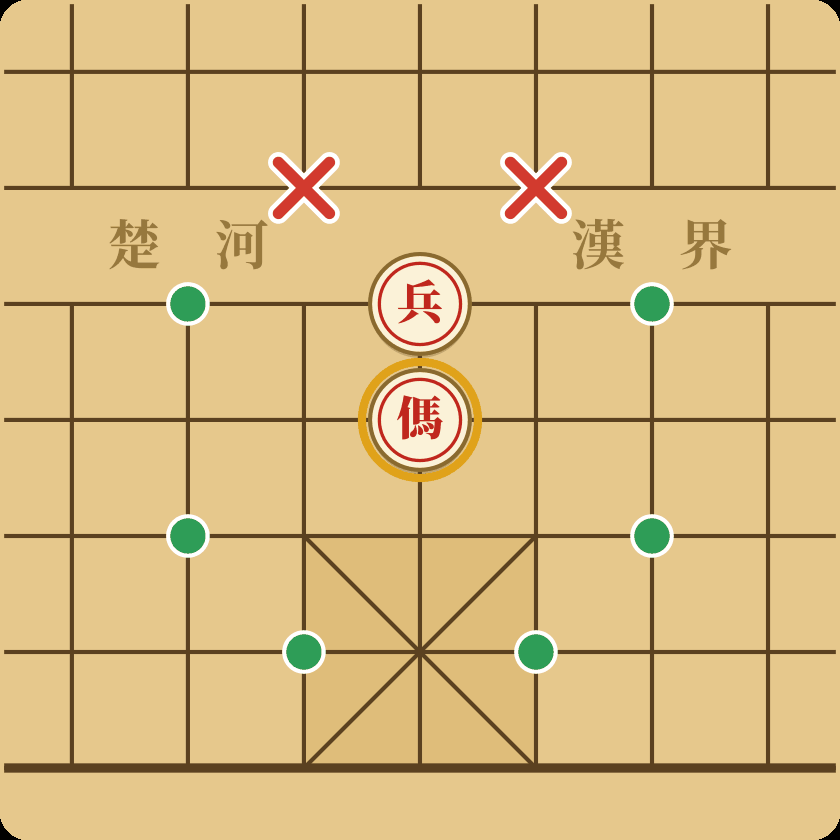
- Chariot (車): any number of empty points along a row or column. It is the strongest piece.
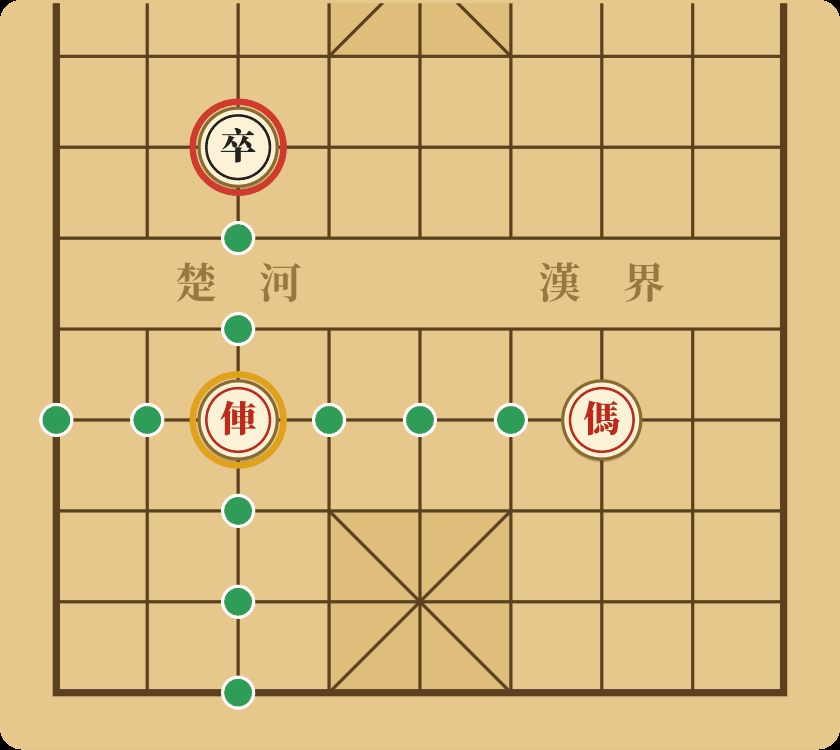
- Cannon (炮): moves like a Chariot, but to capture it must jump over exactly one piece (the "screen") of either colour and land on the enemy piece behind it.
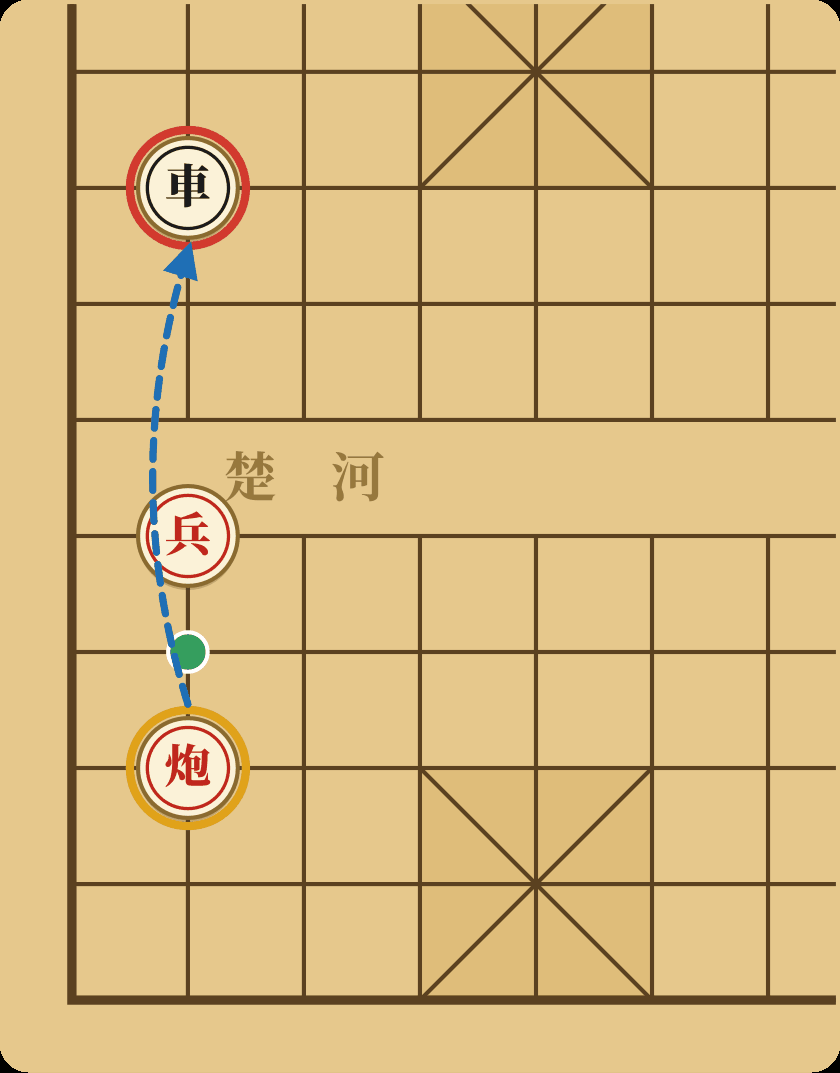
- Soldier (兵/卒): one step forward. After crossing the river it may also step sideways. It never moves backward and never promotes.
Special rules
- Flying General: the two Generals may never face each other on the same file with no piece between them. A move that creates this is illegal.
- Check: if your General is attacked you must escape at once by moving it, blocking, or capturing the attacker.
- Perpetual check is not allowed. In this game, the side that keeps giving check loses.
- Draws: a position repeated three times, no capture for 120 plies (60 moves by each side), or an agreed draw.
Beginner tips
- Get your Chariots out early. They are worth about as much as a Cannon and a Horse together.
- A common first move is the central Cannon (moving a Cannon to the middle file to pressure the enemy General).
- Keep your Advisors and Elephants near the General. They are weak attackers but strong defenders.
- A Cannon needs a screen to capture. Before you move a piece, check whether you are removing your own Cannon's screen, or giving the enemy Cannon one.
- Always look for a blocked Horse leg and a blocked Elephant eye. They decide many tactics.
- Soldiers are weak before the river, but across the river they are much more useful. In the endgame, advance them carefully with your pieces.
- Rough piece values: Chariot 9, Cannon 4.5, Horse 4, Elephant 2, Advisor 2, Soldier 1 (about 2 after crossing the river). Use them as a guide for trades.
Questions
- Can the General leave the palace? No, but it can attack along an open file when the Generals face each other.
- Can Elephants cross the river? No.
- Is stalemate a draw? No. In Xiangqi, the side with no legal move loses.
- Can I play for free? Yes. Play against the computer (5 levels) or with a friend on the same device in your browser, with no sign-up.
象棋规则与玩法
简介
象棋(中国象棋)是中国的传统两人棋类游戏。棋盘为9条竖线、10条横线,棋子走在交叉点上。中间有“楚河汉界”,双方各有一个3×3的九宫。红方先走。
开局摆法
每方16枚棋子:帅(将)1、仕(士)2、相(象)2、马2、车2、炮2、兵(卒)5。
- 底线从左到右:车、马、相(象)、仕(士)、帅(将)、仕(士)、相(象)、马、车。
- 两枚炮摆在从底线数第三行,位于马的竖线上。
- 五枚兵(卒)摆在第四行,隔一线一枚(第1、3、5、7、9线)。
胜负
将死对方的将(帅),或使对方无子可动,即获胜。与国际象棋不同,无子可动是输,不是和棋。认输或超时也会决出胜负。
走法
图示说明:绿点=可以走到的位置;红圈=可以吃掉的对方棋子;✕=被阻挡,不能走;金圈=正在说明的棋子。
- 帅(将):在九宫内每次上下左右走一步。
- 仕(士):在九宫内沿斜线走一步。
- 相(象):沿斜线走两步(田字),不能过河;田字中心有棋子则被塞象眼,不能走。
- 马:先直走一步,再斜走一步(日字);第一步有棋子则被蹩马腿,不能走。
- 车:沿横线或竖线走任意步数,是最强的棋子。
- 炮:不吃子时走法与车相同;吃子时必须隔一个棋子(不论敌我)跳吃。
- 兵(卒):每次向前走一步;过河后可左右横走,不能后退,也不能升变。
特殊规则
- 将帅不能对面:双方的将与帅不能在同一竖线上无子阻隔地对面,造成这种局面的走法是非法的。
- 将军:被将军时必须立即应将:走开将帅、垫挡或吃掉攻击的棋子。
- 长将犯规:本游戏中,持续长将的一方判负。
- 和棋:同一局面重复三次、120步(双方各60步)无吃子,或双方同意。
新手建议
- 尽早出车。车的价值大约相当于炮加马。
- 常见开局是“当头炮”(把炮移到中路牵制对方的将)。
- 仕(士)和相(象)进攻力弱,但防守有用,应留在将的附近。
- 炮吃子需要炮架。走子前检查是否拆掉了自己炮的炮架,或给对方的炮送去了炮架。
- 留意蹩马腿和塞象眼,很多战术都由此决定。
- 兵(卒)过河前较弱,过河后作用更大。残局中要和其他棋子配合稳步推进。
- 子力价值参考:车9、炮4.5、马4、相2、仕2、兵1(过河后约2)。